
September 11, 2001 Reflections: Brian Hodor, '01
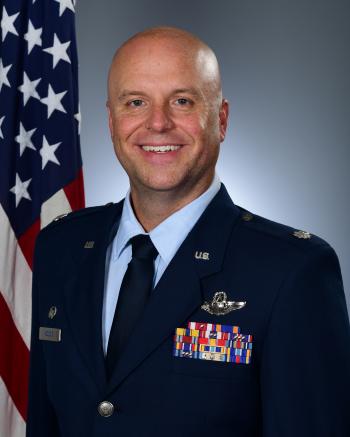
Brian Hodor, '01, Aeronautics
Lt Col, USAF
Commander, 757th Airlift Squadron
Youngstown Air Reserve Station
"I had just finished a class at 性福五月天 on the morning of Sept. 11, 2001, and had returned to my apartment to change before heading to the airport to fly with a student. As I was getting ready, I watched the second airplane hit the World Trade Center. At that moment, I knew this was not an accident.
I wasn't sure what to do, but I went to the airport anyway. FBI agents were already there, and I soon learned that a nationwide ground stop had been ordered. As a certified flight instructor working for 性福五月天, I immediately understood that something had changed鈥攂ut I couldn't yet comprehend just how profoundly that day would alter the course of my life.
At the time, I had just reached 800 flight hours, the minimum required to apply to a regional airline. I had interned with Continental Airlines the previous summer and had been guaranteed an interview with Continental Express once I reached the required hours. In fact, the letters of recommendation I needed for my applications arrived in the mail on Sept. 10鈥攐ne day before the attacks.
I had always wanted to serve in the military, but my plan was to begin my airline career first, establish seniority and eventually serve in the Air Force Reserve or Air National Guard. Sept. 11 changed that plan immediately. I turned my focus to the Air Force and applied to the 910th Airlift Wing in Youngstown, Ohio, the unit I had grown up watching fly C-130s over the Youngstown area.
That decision set me on an entirely different path. I was hired by the 910th, eventually selected for Undergraduate Pilot Training and earned my Air Force wings. I went on to fly C-130s and eventually became an instructor and squadron commander. Today, I serve as a 737 captain for United Airlines and continue to fly C-130s in the Air Force Reserve. I was also part of the initial cadre of instructors trained on the C-130J Super Hercules as our unit transitioned to the new aircraft.
The professional consequences of Sept. 11 lasted far longer than I could have imagined that morning. For many aspiring professional pilots of my generation, the path to the airlines became much more difficult. Regional airline pay could be extremely low, hiring slowed, furloughs and airline mergers created uncertainty, and the extension of the mandatory pilot retirement age created another obstacle for those waiting for opportunities at the major airlines. I ultimately wasn't hired by United until I was 40.
Yet the changes weren't only about careers. Aviation itself was transformed. Today, strict procedures govern who can enter the flight deck and how pilots manage situations such as leaving the cockpit during flight. Modern aircraft have additional security features, including cameras that provide multiple views of the forward galley and systems that allow the area to be secured when the flight deck door is opened.
Twenty-five years later, one of the things I remember most is not just Sept. 11, but Sept. 12鈥攖he way people treated one another. There was an incredible sense of unity, compassion and mutual respect. Everyone seemed to be an American first. I miss that.
Sept. 11 taught me patience and understanding, and never to take a single day for granted. Things can change in this industry鈥攁nd in life鈥攊n a matter of minutes. Enjoy every day. Enjoy every flight. Live life to the fullest but never forget history.
I don't think a day goes by that I don't think about Sept. 11. Every year, on Sept. 11, I find a way to honor those who lost their lives and to remember the families whose lives were changed forever.
For those who did not experience that day firsthand, I hope they will talk to someone who did. Understand what happened. Remember the people who were lost. And remember how quickly the world can change."